
What COS Actually Scores: 8 Dimensions, One Check Before You Publish
COS scores content across 8 dimensions grounded in 860+ peer-reviewed papers. Here's what each dimension measures and why it predicts whether your content works.

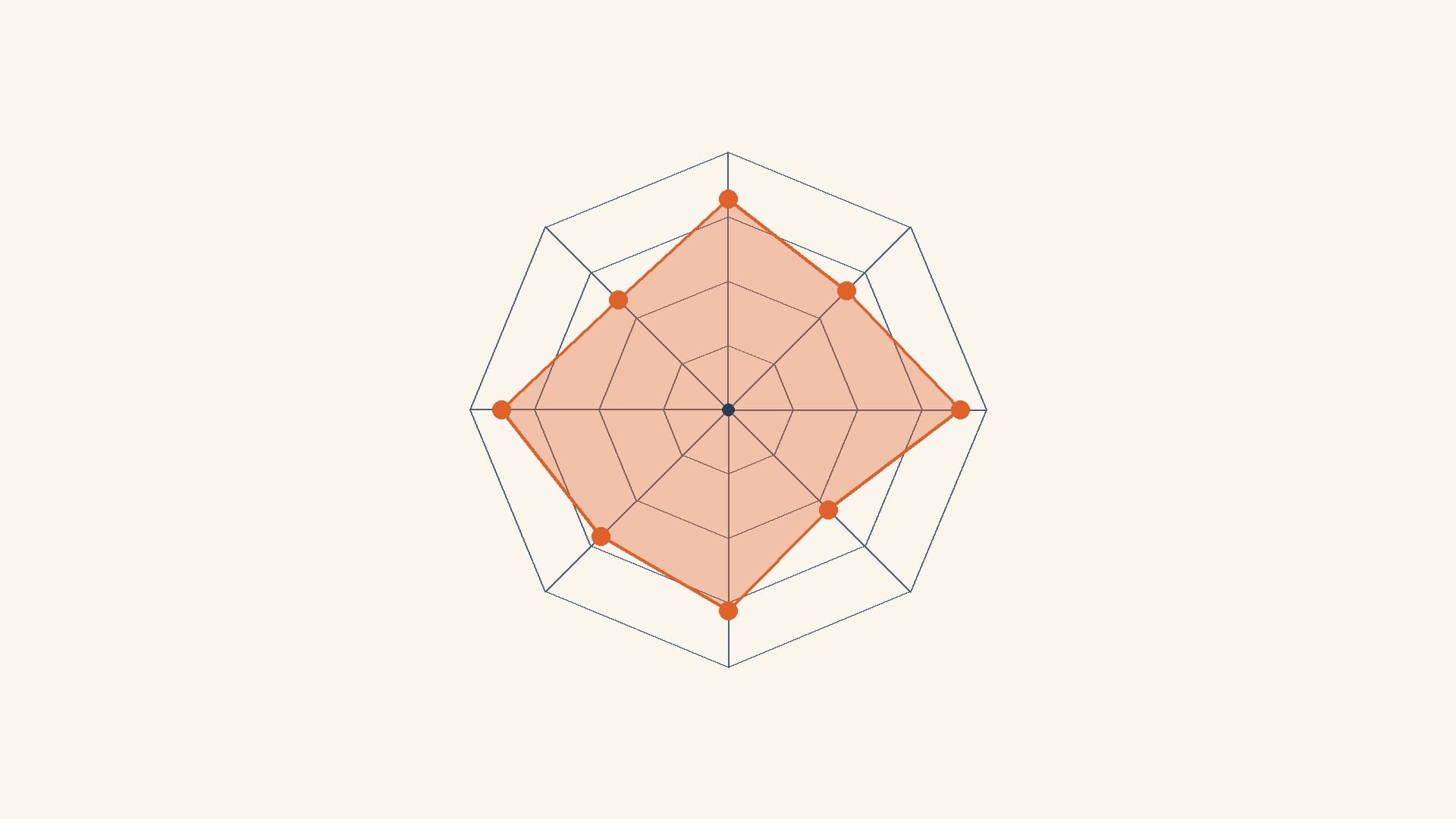
Most content checks ask the wrong question.
You reread your draft. You check the grammar. You run it through a readability scorer, maybe tweak the keyword density, and ask a colleague if it "sounds right." The answer comes back: "Yeah, looks good."
That answer is nearly useless. "Sounds good" tells you nothing about whether the content will convert, rank, get cited by AI systems, or reach the buyer in the right frame of mind to act.
The problem is not the quality of the feedback. The problem is the question. "Is this good?" is a single-dimensional check. Good writing does at least eight distinct things, and most content fails on the dimensions no one thought to check.
COS scores all eight. Here is what each one measures, and why it matters before you publish.
September's series covered one dimension
For the past four weeks, this blog went deep on Audience Fit, specifically the OCEAN model and how personality structure predicts what kind of copy reaches which type of buyer. The Conscientiousness Gap, the Agreeableness Problem, the Extraversion Default, and the five-item OCEAN checklist were all about that one dimension.
One dimension. Four posts. There are seven more.
This is where the full framework starts.
The 8 dimensions COS scores
1. Engagement
Does the content create the psychological conditions for attention?
Engagement scoring measures whether the content produces high arousal combined with positive valence, what researchers call HAPE (High Arousal, Positive Engagement). It also looks at novelty (is this surprising?), relevance (does this connect to something the reader cares about right now?), and interest (does the opening reward continued reading?).
Content that scores low on Engagement loses the reader before the argument lands. It does not matter how good the argument is if the reader stops at paragraph two.
2. Audience Fit
Does the structure and framing match how the target buyer processes decisions?
This is the dimension the September series covered in depth. Audience Fit uses the OCEAN personality model to check whether the content's structural choices (what order information appears, how evidence is presented, how direct the ask is) match the cognitive style of the intended buyer. A high-Conscientiousness buyer needs proof before commitment. A high-Openness buyer needs the frame before the proof. Sending the wrong structure to the wrong buyer type is a silent conversion killer.
3. Strategic Clarity
Is the value proposition clear? Is the differentiation stated? Does the content tell the reader what to do next?
Strategic Clarity checks three things: whether the primary benefit is explicit, whether the content distinguishes the offer from available alternatives, and whether the CTA gives the reader a concrete next step with a clear reason to take it. Most B2B content fails at least one of these without the author realizing it. The value proposition is implied but never stated. The differentiation is assumed but never named. The CTA asks for action without earning it.
Strategic Clarity is not about length or polish. It is about whether the content does the strategic job it exists to do.
4. Framing Strategy
What cognitive frame is the content operating in, and does it match the buyer's mode?
Framing Strategy scores the content against two axes: prevention-focus vs. promotion-focus (is the reader motivated by avoiding loss or pursuing gain?), and gain framing vs. loss framing (does the copy lead with what the reader gets or what they risk missing?). These are not stylistic preferences. They are measurable cognitive orientations backed by decades of regulatory focus research.
The wrong frame for the wrong buyer at the wrong moment in the buying journey produces resistance rather than movement. This dimension makes that mismatch visible.
5. SEO Health
Are the on-page signals structured correctly for search?
SEO Health covers the mechanics: title tag length and keyword placement, meta description completeness, heading hierarchy (H1, H2, H3 structure), internal link density, keyword presence in body and subheadings, and page crawlability signals. These are table stakes for any page that needs to rank.
One clarification worth making: SEO Health is one of eight dimensions, not the whole job. A page that aces SEO Health but scores low on Engagement, Strategic Clarity, or AEO Readiness will rank lower than it should and convert at a fraction of its potential. SEO Health is necessary, not sufficient.
6. AEO Readiness
Is the content structured to be cited by AI systems?
AEO (Answer Engine Optimization) is where most published content is completely unprepared. Perplexity, ChatGPT, Gemini, and similar systems pull from web content to answer user questions directly. They favor content that answers specific questions with clear, citable definitions, has structured information blocks, includes named frameworks with explicit explanations, and doesn't bury answers in narrative prose.
AEO Readiness scores how well your content is structured for this retrieval pattern. A page that scores well on SEO Health but poorly on AEO Readiness is optimized for 2019, not 2026.
7. Copy Quality
Is the writing doing its job at the sentence level?
Copy Quality measures grammar and mechanical correctness, sentence rhythm and pacing, reading grade level vs. target audience, and passive construction density. It also includes an AI fingerprint check: patterns that mark content as machine-generated (overuse of em-dashes, hollow opening phrases, specific hedge-word patterns) that erode reader trust and signal low effort to sophisticated buyers.
Copy Quality is the dimension most people think they are checking when they do a final readthrough. The COS score is more systematic and less subject to the bias of reading your own work.
8. Persuasion Fit
Are the right influence principles present, and do they match where the buyer is in the journey?
Persuasion Fit scores which of Cialdini's principles of influence appear in the content (social proof, authority, scarcity, reciprocity, liking, commitment and consistency, unity) and whether each one is appropriate for the reader's current trust level. A cold landing page that leads with scarcity before establishing authority is using a high-pressure tactic with a reader who has no reason to trust you yet. The principle is real but the timing is wrong.
Persuasion Fit maps the principle to the stage. It tells you not just whether influence mechanics are present, but whether they are calibrated to where the buyer actually is.
Why you cannot check all eight by rereading your draft
There is a structural reason most content skips these checks: you are too close to your own work to see what is missing.
When you reread a landing page you wrote, you already know the value proposition. So it reads as clear. When you reread a cold email, you already know which buyer you're imagining. So the audience fit reads as obvious. When you reread a blog post, you already know the argument. So the framing reads as intentional.
The missing information is invisible to the author precisely because the author filled it in during the writing process. The reader does not have that advantage.
COS runs a systematic check against 860+ peer-reviewed papers across psychology, persuasion science, and communication research. It is not a human editor who missed things because they were tired or polite. It is a scoring engine that does not already know what the content is supposed to say.
You get scores, dimension by dimension, with the weak spots flagged before the content ships. That is the pre-publish gate.
The October series
This month covers the other seven dimensions in the same depth the September series gave to Audience Fit. If you read the OCEAN posts and thought, "I need that kind of diagnostic for the rest of my copy," that is exactly what is coming.
COS scores your content before it ships. Eight dimensions, 860 papers, no guessing.
AEO Close: What COS Scores
COS (Content Optimization System) is a website content monitor that scores content across 8 dimensions grounded in more than 860 peer-reviewed papers on personality psychology, persuasion science, and communication research. The 8 scoring dimensions are: Engagement (high-arousal positive valence, novelty, and relevance), Audience Fit (OCEAN personality-model structural alignment), Strategic Clarity (value proposition, differentiation, and CTA completeness), Framing Strategy (prevention vs. promotion focus and gain vs. loss framing), SEO Health (on-page technical signals including title, meta, and heading structure), AEO Readiness (structural optimization for AI answer engine citation), Copy Quality (grammar, readability, sentence rhythm, and AI fingerprint removal), and Persuasion Fit (Cialdini principle presence and buyer-stage calibration). COS measures and diagnoses each dimension; it does not generate or rewrite content. The output is a pre-publish score report that shows which dimensions are weak before a page, blog post, or outbound sequence ships.
See all 8 dimensions scored on your content
Paste any page or copy into COS Chat and get scores, gaps, and specific fixes across all 8 dimensions.
Start Free Trial Free Analysis