The Message-Measurement Gap: Why B2B Content Fails Before You Ever Hit Send

Most B2B teams measure whether people clicked. Not whether the message landed. The two aren't the same, and the distance between them is where most campaigns quietly die. Roughly two-thirds of your audience disengages before that gap closes.

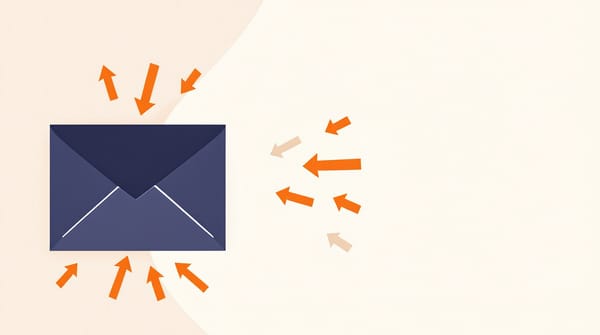
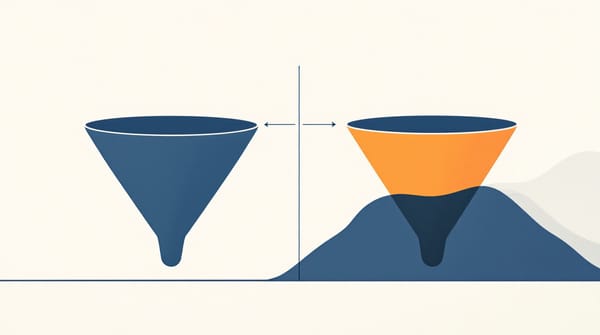
Infographic showing "The Message-Measurement Gap," where high engagement metrics like open rates fail to reach sales targets due to cognitive, arousal, and framing blind spots.
High engagement metrics often mask a deep disconnect between initial attention and final sales, where hidden psychological blind spots prevent even the most popular content from hitting its conversion targets.

A demand-generation team I know ran a campaign that looked clean. Open rate above benchmark. Click-through solid. Some replies. Marketing called it a win. Sales called it a drought. When the postmortem happened, the assumption was that the offer was wrong, or the timing was off, or the landing page needed work.

None of those were the problem.

The message had reached the right job titles at the right companies. On paper, the audience was correct. But the content was written for a specific cognitive style, and roughly two-thirds of the people in that audience didn't share it. They opened the email. They clicked. Then they read the first paragraph and felt, faintly, like this wasn't written for them. They didn't bounce in anger. They just closed the tab.

The metrics showed engagement. They couldn't show audience-fit.

Upvotes, opens, clicks, and even replies measure attention. They don't measure comprehension, persuasion, or the probability that a reader will take the action you needed. The gap between attention and action is where most B2B content fails. And the gap is invisible until you have instruments that measure it.

Blind Spot 1: Personality Mismatch Doesn't Show Up in Your Dashboard

Research on cognitive style distribution in general populations puts roughly 32% of people in the high-openness range: comfortable with abstraction, frameworks, novel models, and unconventional takes. The remaining 68% process information differently. They want concrete examples, systematic structure, and familiar anchoring.

Most B2B content writers are in the 32%. It is a selection effect. People drawn to writing, strategy, and brand work skew toward openness and abstraction. They write content that resonates with them. They publish it. The 32% of their audience who share that style engage, comment, and repost. The other 68% scroll past or close the tab without making any noise.

The metrics show you the 32%. They don't show you the 68% who departed quietly.

This isn't fixable through editing alone. A high-openness writer revising their own work for a low-openness audience is an act of guesswork. The problem isn't word choice. It's the underlying cognitive framing of the argument. Abstract-to-concrete is the wrong order for a high-conscientiousness reader. Framework-first is the wrong structure for a reader who wants the outcome stated in the headline. Averages in your analytics flatten the distribution and make the mismatch invisible.

Blind Spot 2: Arousal Level Is Wrong for the Funnel Stage

High-arousal content generates visible metrics. Urgency copy, FOMO framing, contrarian takes, and provocative claims all drive opens and initial engagement. This is why most B2B content sounds the way it does. The metrics reward it.

The problem is that arousal level and funnel stage interact. High-arousal messaging works at awareness. It is specifically wrong for trust-building, which is where most B2B purchases actually happen. Buyers evaluating a $50K or $100K software decision don't want to feel pressured. They want to feel informed.

Reactance theory is the mechanism. When a reader detects persuasion pressure, they push back. Not consciously, usually. The feeling is "something about this doesn't sit right." The reader disengages even if the initial click happened. The campaign log shows strong engagement. The CRM shows no progression past first touch.

Teams misdiagnose this constantly. The interpretation is that the offer is weak, or the landing page isn't converting, or the product needs work. The actual problem is that the tone of the content triggered a trust-defense response before the prospect ever reached a decision point.

Blind Spot 3: Frame Mismatch Creates Invisible Resistance

Messaging frames embed moral assumptions. A frame built around Liberty (individual autonomy, personal choice, freedom from constraint) lands differently than a frame built around Care (collective benefit, harm prevention, shared responsibility). Both are legitimate. Most B2B content picks one without knowing it.

The problem is that buyer psychology isn't uniform on this dimension. Some VP Marketing buyers evaluate software through a Liberty lens: does this expand my team's capability? Does this give me more control? Others evaluate through a Care lens: does this reduce risk? Does this protect the organization?

When the frame in your message doesn't match the buyer's underlying values, the buyer feels something is off. They can't articulate why. The content seemed relevant. The product seems real. But something about the pitch registers as misaligned. The behavioral outcome is "engaged but didn't convert," which is exactly the same diagnostic signature as the personality mismatch and the arousal mismatch.

Frame mismatch is the hardest of the three to fix because it isn't a copywriting problem. Changing words inside the wrong frame doesn't help. The frame has to change, and that requires knowing what frame your audience is actually using.

Why Better Copy Doesn't Close This Gap

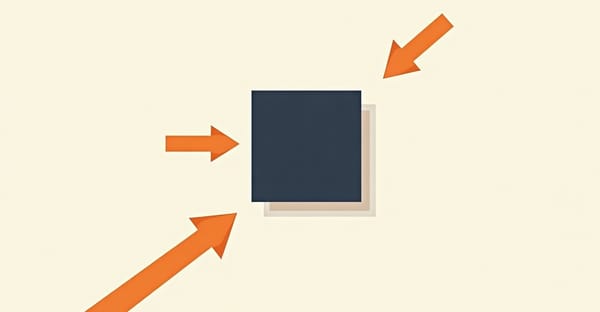
Notice what the three blind spots share. None of them is a copywriting problem. A high-openness message rewritten with crisper sentences is still a high-openness message. A reactance-triggering tone polished by an editor still triggers reactance. A Liberty-framed pitch restated with cleaner verbs is still Liberty-framed. The cognitive style of the reader, the arousal register of the situation, and the moral foundation in play are all upstream of word choice.

Better copy sharpens a message that is already aimed correctly. It cannot move a misaimed message into alignment with an audience whose psychology was never the target. That is what makes the gap durable. Teams that respond to flat conversion by hiring better writers are improving the wrong variable. The variable that needed measurement was the fit, not the prose. Measurement is what closes that loop.

What the Measurement Gap Looks Like in Practice

Two well-known sales-enablement vendors both have high-performing homepages by standard engagement metrics. Time on page, scroll depth, and conversion-rate benchmarks are solid for both. When measured through COS, the scores diverged in one dimension.

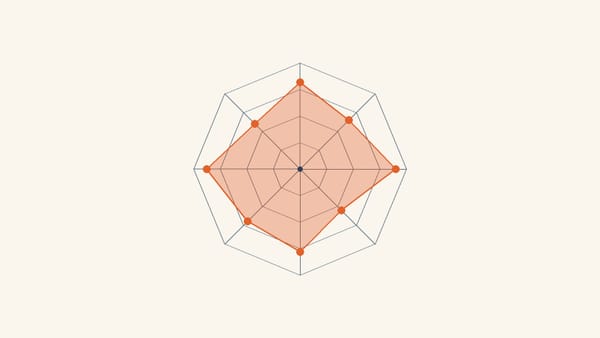
Vendor A: HAPE 61, Big Five Fit 82, Strategic Clarity 30. Vendor B: HAPE 66, Big Five Fit 100, Strategic Clarity 50.

Both companies scored well on Efficacy and Agency (empowerment language, clear CTAs). Both scored poorly on Strategic Clarity relative to their engagement numbers. Vendor A's Authenticity score was low (40) because of superlatives and branded terminology that read as marketing-voice to skeptical buyers. Vendor B's Audience Targeting scored 30 because the primary header descriptor was too broad to trigger the cognitive recognition that a reader is in the right place.

The engagement metrics showed two websites that were performing comparably. The COS scores showed two specific, different problems that the engagement data couldn't surface. One is a credibility problem. The other is an audience-definition problem. They require different fixes. Without measurement, both get lumped into "needs optimization."

The Missing Instrument

We have thermometers for temperature. We have scales for weight. We have rulers for distance. We have A/B testing frameworks that measure which version of a message gets more attention. We don't have instruments for measuring whether a message fits the psychology of the audience it's aimed at.

When I've looked at campaigns that converted poorly despite strong engagement numbers, the problem is almost never the offer and almost always one of these three gaps. Personality mismatch. Arousal miscalibration. Frame collision with audience values. The campaign postmortem never names these because the data collected can't name them.

A thermometer doesn't help you cook better by accident. It helps you cook better on purpose, before you serve the dish. The same logic applies to message-audience fit. Measuring it after a campaign is over and budget is spent is useful for learning. Measuring it before you ship is where the ROI lives.

What's the strangest disconnect you've seen between engagement metrics and actual buying behavior on a campaign you ran?


If you want to see what this measurement looks like on your own copy, COS does it. semalytics.com/cos


Subscribe to COS by SEMalytics

Sign up now to get access to the library of members-only posts.
Jamie Larson
Subscribe