
The Personality Drift Problem: Why AI Copy Gets Blander the More You Scale It

Six months into AI-assisted copy generation, most marketing teams notice the same thing: the output doesn't feel like them anymore.
The outputs are technically correct. Grammatically clean. Professionally toned. The message architecture is there. But something specific has gone out of the copy. The sentences that used to have an edge now read like boilerplate. The cold email that used to get replies now generates silence.
Most teams diagnose this as a prompt engineering problem. Add more examples to the system prompt. Sharpen the persona definition. Build a brand voice guide and paste it in at the top. The prompt approach produces incremental improvement, and then the copy drifts again.
The prompt is not the root problem.
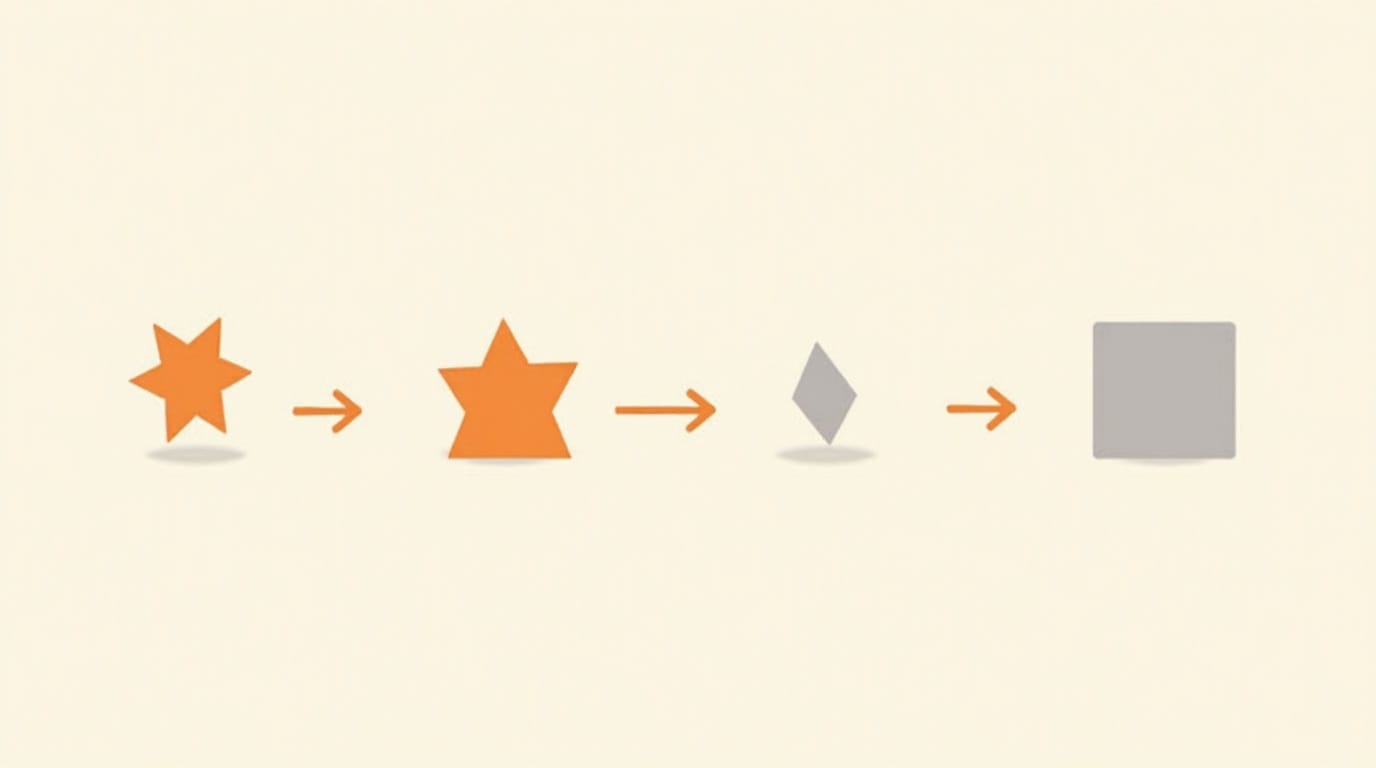
The root problem is structural: language models generate text by predicting the most statistically probable next token given the training distribution. The more you use AI for B2B copy without an explicit personality constraint applied at generation time, the more the output gravitates toward the centroid of the training distribution for B2B copy.
That centroid is bland. And at scale, you manufacture it efficiently.
What Personality Drift Looks Like in Practice
Here is the same company, same campaign, same ICP, before and after a year of AI-assisted copy at scale.
January 2025 (pre-AI scale):
Your CFO is reading your cold outbound with the same skepticism she applies to analyst reports. You need specific proof, not vision narrative. Here's the four-part framework that works for C-suite budget approvals.
January 2026 (post-AI-at-scale):
Transform your outbound communication strategy with AI-powered insights. Our comprehensive solution helps B2B teams optimize messaging across all stages of the buyer journey.
The second version hasn't been written for anyone. It's been written for everyone. The statistical overlap between what every B2B SaaS vendor says, optimized for professional register, is exactly that: "transform," "optimize," "comprehensive," "solution."
This is personality drift. Not because the model is bad: because the model is doing exactly what it's designed to do. It's predicting the most likely tokens given the context of "write B2B marketing copy." The most likely tokens are the ones that appear most frequently in B2B marketing copy. The most frequently appearing tokens are the generic ones.
The first version contains evidence density, buyer-role specificity, and prevention framing. All three are measurable markers of high-Conscientiousness targeting. The second version contains none of them. It isn't targeting any OCEAN profile. It's targeting the average of professional B2B communication, which is no one in particular.
Why Scale Makes It Worse
When teams generate AI copy at low volume, one email, one ad set, one landing page variant, they review it manually. Bland outputs get flagged. A human rewrites the "transform your strategy" sentence into something that sounds like the company. Manual review is the personality filter.
At high volume, 200 email variants, 40 ad sets, 12 landing pages, manual review breaks down. The review sample becomes a fraction of the total output. Bland outputs that would have been caught at low volume get through. The aggregate personality of the copy portfolio drifts.
This is the drift mechanism in its simplest form: manual review rates fall as AI generation volumes rise. The outputs that most need personality filtering are least likely to be caught, because there are too many of them to catch.
There is a second mechanism that's harder to see from inside: expectations drift. What reads as "generic" at month one starts reading as "clean and professional" at month six. The detection threshold shifts with the baseline. By the time leadership names the problem, "our copy doesn't feel like us anymore," the drift is already six months deep and the team has partially stopped noticing it.
The combination of those two mechanisms is what makes personality drift a structural problem rather than a quality control problem. You can't QA your way out of it at scale. The volume defeats the QA process, and the QA process gradually recalibrates its own standards downward.
What Personality-Grounded Generation Prevents
The structural fix for personality drift is not more manual review. It doesn't scale, and it's already losing the race. It's not better prompts either. Prompts patch specific instances of drift without addressing the generative process that produces it.
The structural fix is constraining generation to a specific personality target before generation happens.
Personality-grounded generation works like this. Define the OCEAN profile of the target buyer: a high-Conscientiousness, low-Extraversion CFO who evaluates claims by evidence density and distrusts aspirational framing. Generate copy with that profile as an explicit constraint on the output distribution, not as an afterthought in the review step.
The output is not the statistical center of B2B copy. It's a specific region of the personality-resonance space that matches the buyer. Evidence-dense sentences, not aspiration sentences. Prevention framing ("avoid," "protect," "reduce risk") rather than promotion framing ("unlock," "transform," "achieve"). Specific claims with numbers, names, and mechanisms rather than general claims that can't be verified.
Reviewed against an OCEAN scoring rubric, personality-grounded copy doesn't drift because the constraint is applied at generation, not correction. The copy that looks "too specific" or "too blunt" to a general audience is the copy that was actually built for someone.
This is what COS (Content Optimization System) does. The four scoring frameworks, Engagement, Personality fit, Strategic Clarity, and Framing Strategy, measure whether the output matches the buyer profile, not whether it's statistically typical B2B copy. Typical B2B copy fails the Personality fit score consistently. High-Conscientiousness buyers need evidence density above a threshold; "comprehensive solution" doesn't contain any. The scoring makes the absence visible.
The generation-time constraint keeps output out of the drift zone from the start. The scoring framework catches what slips through. Combined, they close the gap that manual review can't.
How to Detect Drift in Your Current Copy Portfolio
If you've been running AI-assisted copy generation for more than three months, drift is likely present. These three checks surface it quickly.
Adjective density. Count the adjective-noun pairs in a sample of your AI-generated copy: "innovative platform," "comprehensive solution," "seamless experience," "proven methodology." More than two or three pairs per 100 words is a high-drift signal. Adjective-heavy copy is the most reliable surface marker of statistical-center language. It's also the copy that high-Conscientiousness buyers discount immediately, because adjectives don't carry verifiable information.
Specificity test. For any factual claim in the copy, ask: can this be verified with a number, a name, or a process step? "Reduces onboarding time by 40%" passes. "Streamlines your workflow" fails. "Our customers typically see results in the first 30 days" passes if you have data. "Helps teams work better" fails. Unverifiable claims are probable statistical output, not personality-targeted copy. A portfolio where most claims fail the specificity test has drifted.
Buyer-role swap test. Take a piece of copy and mentally replace the implied buyer role: if it was written for a CFO, read it as a VP of Marketing would. If the copy reads equally well for both, or neither, it wasn't written for anyone. Personality-targeted copy should feel slightly wrong for the wrong buyer. That's the signal it was targeting the right one. Generic copy passes the swap test because it wasn't specific enough to fail it.
Run those three checks on ten recent pieces of AI-generated copy and score each one. If seven or more fail two or more checks, the drift is significant enough to affect reply rates and conversion.
The Measurement That Makes It Visible
The reason personality drift compounds quietly is that it doesn't trigger the metrics teams usually watch. Open rates stay stable: subject lines often escape the drift because they're shorter and easier to manually review. Grammar is fine. Readability scores are fine. The copy is doing everything right by general-quality measures.
The metric that registers drift is Personality fit against a specific buyer target. A high-Conscientiousness CFO presented with adjective-dense, aspiration-framed copy has a measurable mismatch between what the copy delivers and what the profile is looking for. COS surfaces that mismatch as a Personality fit score. When that score falls below a threshold for your defined target profile, drift is present regardless of what the general quality metrics say.
This is why personality fit scoring belongs at the output stage, not the review-sample stage. Applied to every piece of AI-generated copy, it catches drift before it accumulates into a portfolio problem. Applied to a sample after the fact, it tells you what already got out.
If you're running AI generation at scale and haven't measured Personality fit against your buyer profiles, the drift is probably already there. The copy just hasn't been measured against anything that would surface it.
Where to Start
Run five to ten pieces of current AI-generated copy through COS and look at the Personality fit scores against your target buyer profile. If the scores cluster in the bottom half, drift is present. That's the diagnostic.
The fix after that isn't replacing AI generation: it's constraining it to a specific personality target so the statistical pull toward the training centroid can't operate unchecked.
For the structural framework on what makes copy sound generic regardless of AI involvement: 5 Brand Voice Mistakes That Make Your Copy Sound Like Everyone Else's