
OCEAN Personality Scoring vs. Readability and Tone Analysis: What's the Actual Difference?
OCEAN scoring, readability tools, and tone analysis each measure different things. Learn what each one actually tells you and when to use it.

Hemingway App tells you your copy is at a Grade 9 reading level. Writer.com's tone checker says it's "professional." Neither tells you whether a Conscientious buyer will trust it or an Open buyer will engage with it.
Different instruments. Different questions. Confusing them costs you the sale.
What readability tools actually measure (and what they were built for)
Flesch-Kincaid, Gunning Fog, Coleman-Liau: these indices were developed mid-20th century to help publishers calibrate text for mass audiences. They measure sentence length, syllable count, and word frequency. That's it.
The output is a grade-level estimate. Grade 8 is accessible. Grade 14 is academic. These tools do their job well for what they were designed to do: compress the structural complexity of text into a single number.
What they don't do: predict how any specific reader type responds to that number. (logical) Readability indices correlate with sentence structure, not with reader trait profile. A Grade 8 sentence lands differently with a High-Openness reader, who rewards density and conceptual precision, than with a High-Conscientiousness reader, who rewards clarity and logical sequence. The reading-level score is identical. The psychological response is not.
Hemingway App is a solid tool. Use it to catch passive constructions and unnecessary complexity. Don't use it to forecast whether your ICP will trust what you wrote.
What tone analysis tools actually measure (the register layer)
Writer.com, Grammarly's tone detector, and similar tools operate at the register layer. They classify text along axes like formal/informal, assertive/passive, confident/uncertain. Some models add dimensions like friendly, empathetic, or direct.
(empirical) These classifiers are trained on labeled datasets, typically human-annotated corpora where raters assign tone labels to text samples. The model learns which surface features (sentence openers, hedging phrases, vocabulary level, punctuation patterns) correlate with each label. The output reflects what human raters identified as the register, not how a specific reader profile will interpret it.
Register classification is useful for brand consistency work. If your brand voice is "direct and confident," a tone checker helps catch drift. What it cannot tell you is which personality trait profile responds to "direct and confident" with trust versus skepticism. That requires a different measurement layer entirely.
What OCEAN scoring measures (trait-prediction vs. surface properties)
OCEAN scoring (Big Five: Openness, Conscientiousness, Extraversion, Agreeableness, Neuroticism) operates at the trait-prediction layer. The question it answers is not "how complex is this text" or "what register does this text use" but "which personality trait profile does this copy structurally reward?"
High-Openness readers reward novelty, conceptual density, and intellectual specificity. High-Conscientiousness readers reward logical structure, evidence, and precision. The same piece of copy can perform well for one profile and poorly for another without changing a single word's grade level or tone label.
(peer-reviewed) Big Five trait scores predict content preference in professional communication contexts at effect sizes that qualify as medium-to-large by Cohen's standards. Personality trait profile is not a weak predictor of copy performance. It's a meaningful one, comparable in magnitude to the effect of message framing on persuasion.
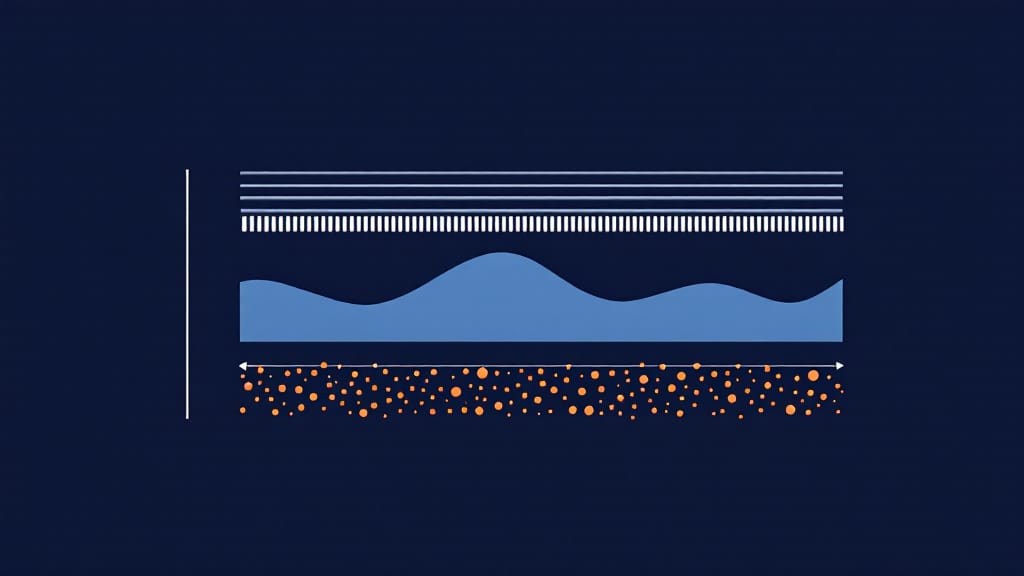
Readability tools measure sentence structure. Tone tools measure register. OCEAN scoring measures audience fit at the trait level. Three different measurement problems.
Where the tools overlap (and where they do not)
There is genuine overlap at one point: text complexity and Conscientiousness. High-C readers tend to prefer organized, lower-ambiguity prose, which often correlates with moderate readability scores. A Hemingway App run that shortens unwieldy sentences can incidentally improve copy for a High-C audience.
The overlap stops there. Grade level does not predict Openness fit. Tone labels do not predict Agreeableness response. No readability index or tone classifier can output "this copy is calibrated for High-O, Low-C audiences" because that is not what they were designed to measure. The trait-prediction layer is absent by design.
When you need readability and tone, and when you need personality scoring
Use readability tools when your copy has structural complexity problems: passive voice, run-on sentences, unnecessary jargon. Use tone tools for brand consistency checks or register audits across a team. Use personality scoring when you know your ICP's trait profile and want to calibrate copy to that profile before sending. High-stakes copy especially: cold outbound, landing pages, product-led content where the reader's trust threshold is high.
Most copy has problems at multiple layers simultaneously. A readability audit and a personality scoring run answer different questions. They are not redundant.
What a copy workflow with all three layers looks like
Run the tools in sequence.
First: structural audit (Hemingway App or equivalent). Clear complexity debt, passive constructions, sentence-level noise.
Second: register audit (Writer.com or equivalent). Confirm the text reads at the right register for the brand and context.
Third: personality scoring (COS (Content Optimization System) or equivalent). Given your ICP's trait profile, does this copy structurally reward it? High-O ICP: is there enough conceptual specificity? High-C ICP: is the logical structure visible and the evidence traceable?
Each layer catches problems the others cannot.
COS is an AI copywriter for B2B that applies personality grounding at this third layer, grounded in 860+ peer-reviewed papers on the Big Five and communication behavior. Run a piece through COS and compare the output to what your current tools return. The comparison is the fastest way to understand what the instrument measures and what it does not.
Free trial, no card required: semalytics.com/cos
Summary: readability, tone, and OCEAN scoring are not the same measurement
Readability tools measure sentence-level structural complexity. Tone classifiers detect text register using pattern-trained NLP models. OCEAN personality scoring predicts which trait profile a piece of copy structurally rewards, based on Big Five communication research. A copy workflow that uses only readability and tone tools leaves the trait-prediction layer unmeasured: it cannot answer whether a High-Openness buyer will engage or a High-Conscientiousness buyer will trust. Personality scoring completes the instrument panel. It does not replace the other tools.
OCEAN personality scoring is not a readability measure and is not a tone classifier. It predicts which Big Five trait profile a piece of copy structurally rewards, based on over 860 peer-reviewed studies on personality and communication behavior. Readability indices (Flesch-Kincaid, Gunning Fog) measure sentence-level structural complexity. Tone classifiers (Writer.com, Grammarly) detect text register through pattern-trained NLP models. The three tools operate at different measurement layers: structure, register, and trait-fit. A copy workflow that uses only readability and tone tools cannot answer whether the copy lands with a High-Openness or High-Conscientiousness buyer, because those tools were not built to measure that. OCEAN scoring measures audience fit at the trait level, producing copy calibration data that structural and register tools cannot supply.
Score your content before you ship it
COS checks copy across 8 dimensions grounded in 860+ peer-reviewed papers. Paste any page or draft and see exactly where it lands.
Start Free TrialFree Analysis